




A Journey From Pasture to Plate

Dairy cows grazing on green pasture in soft sunrise light on a peaceful farm morning
Before a wheel of artisan cheese ever reaches a cellar shelf or a wooden tasting board, its story begins somewhere much quieter.
It begins in open fields and early mornings, in the slow rhythm of grazing animals and careful hands, in seasons that shape the land long before they shape flavor.
Imagine standing near a pasture just after sunrise. The grass is still damp with dew. Cows move slowly, unhurried, breathing in cool air. Somewhere nearby, milk is being collected — fresh, warm, full of possibility. At this moment, cheese already exists in potential, even if it has not yet taken form.
This journey — from farm to cellar — is what gives artisan cheese its depth and personality.
Every step matters.
Every choice leaves a trace.
Every season adds its own signature.
Here at Keystone Farms, this connection between land, craft, and flavor is part of everyday life. And it reflects something we often explore at Book of Foods as well: the idea that truly meaningful food is never just a product. It is a process shaped by nature, people, and time.
Artisan cheese is a perfect example of this philosophy.
It is not designed to taste the same every month of every year. It is meant to change, to respond, to reflect what animals eat, how makers work, and how patiently it is aged. One batch may feel brighter and grassy. Another may be deeper and more buttery. Neither is “better.” Both are honest.
When you hold a piece of handcrafted cheese in your hands, you are holding a small archive of decisions and conditions — weather patterns, pasture quality, microbial life, craftsmanship, and patience — all pressed into a living food.
In this article, we will follow that journey step by step. From milk and seasons to cellar walls and human skill, we will explore how each element shapes what you eventually taste.
Because once you understand where cheese comes from, you never experience it the same way again.
Why Milk Matters — The Foundation of Flavor

Glass jar of fresh milk and metal milk can on a wooden table with grazing cows in soft morning light
Every great artisan cheese begins with one essential ingredient: milk. Before cultures are added, before aging begins, before a rind starts to form, everything depends on what flows from the farm.
Milk is not a neutral base. It is a living, responsive substance shaped by animals, land, weather, and care. Its composition changes constantly, and those changes quietly determine how a cheese will taste, feel, and mature.
The breed of the animal plays a major role. Jersey cows, for example, produce milk that is naturally higher in butterfat and protein, which often leads to richer, creamier cheeses. Holsteins tend to produce larger volumes of milk with a lighter profile. Goat and sheep milk bring their own distinctive qualities, from bright acidity to silky texture.
But breed is only the beginning.
What animals eat matters just as much. Fresh pasture grasses, wild herbs, clover, and seasonal plants all pass their character into the milk. When animals graze on diverse, healthy fields, their milk becomes more complex and aromatic. When their diet is limited or heavily processed, that complexity fades.
Farming practices also leave a clear imprint. Stress-free animals, clean environments, careful milking routines, and thoughtful handling all help preserve milk’s natural balance. Healthy milk supports healthy cultures, which in turn support better aging and deeper flavor.
From a technical perspective, milk contains three key elements that shape cheese: fat, protein, and minerals. Fat contributes richness and mouthfeel. Proteins determine structure and texture. Minerals influence how curds form and how moisture is retained. Even small shifts in these components can change how a cheese behaves during production and aging.
This is why artisan cheesemakers pay such close attention to their milk.
Rather than forcing every batch into the same mold, they work with what nature provides. In doing so, they allow the milk to lead the process instead of resisting it.
When you enjoy a piece of handcrafted cheese, you are tasting much more than technique. You are tasting grass and sunlight, rain and soil, care and consistency. You are tasting the invisible foundation that makes everything else possible.
And without exceptional milk, even the most skilled craft cannot reach its full potential.
The Seasonality Effect — How Time of Year Shapes Milk

Dairy cows grazing on green spring grass and golden autumn pasture showing how seasons affect milk production
Milk is not the same in April as it is in November.
That simple truth lies at the heart of artisan cheesemaking.
As seasons shift, so do pastures. Spring brings tender grasses and wildflowers rich in nutrients. Summer offers abundance and intensity. Autumn grasses grow denser and more mature. Winter, depending on the region, may rely more on stored hay or silage. Each phase subtly alters the milk’s fat content, protein balance, and aromatic profile.
In spring, when animals return to fresh pasture, milk often becomes brighter and more vibrant. It may contain higher levels of beneficial fatty acids and natural carotenoids, which can give cheese a slightly golden hue. Cheeses made during this time frequently carry grassy, floral notes and a lively acidity.
By late summer, milk can become richer and fuller-bodied. As animals consume more mature forage, the flavor profile deepens. Cheeses from this period may feel creamier, rounder, and more savory.
Winter milk, influenced by preserved feed, often produces cheeses with a steadier, sometimes milder character. While some might see this as a limitation, experienced cheesemakers understand how to adapt their craft to highlight its strengths.
These seasonal variations are not flaws. They are expressions of time.
Industrial production often aims for uniformity, smoothing out differences to create a consistent product year-round. Artisan cheesemaking takes the opposite approach. It respects the natural rhythm of animals and land, allowing each batch to reflect its moment.
For the cheesemaker, seasonality requires attentiveness. Adjustments may be needed in rennet timing, curd cutting, draining, or aging conditions. Subtle shifts in milk demand subtle shifts in technique.
For the cheese lover, seasonality offers something more exciting: variation.
Tasting the same style of cheese made in different months can reveal surprising contrasts. One wheel may feel bright and herbaceous. Another may lean nutty and buttery. Both are authentic. Both are shaped by nature’s calendar.
Understanding this connection between season and milk transforms how you experience cheese. You begin to notice nuances. You recognize that flavor is not fixed, but alive.
In artisan cheese, the year itself becomes an ingredient.
The Cheesemaker’s Touch — Craft and Intention

Artisan cheese wheels resting on wooden tables in a softly lit cheesemaking workshop with traditional tools
Even with exceptional milk and perfect seasonal conditions, great cheese does not happen on its own. It requires human attention, judgment, and patience. At every stage of production, the cheesemaker shapes the final character of the cheese through hundreds of small, deliberate decisions.
Cheesemaking is often described as both a science and an art, and this balance is especially visible in artisan production. Measurements, temperatures, and timing matter deeply, but so do intuition and experience. A skilled cheesemaker learns to read the milk, noticing how it responds on a particular day and adjusting methods accordingly.
The process begins with cultures and enzymes, which transform liquid milk into curds and whey. The choice of cultures influences acidity, aroma, and flavor development. Some produce bright, tangy profiles. Others encourage nutty, buttery, or earthy notes. These invisible microorganisms become partners in the creative process.
Next comes curd handling. How finely the curds are cut, how gently they are stirred, and how quickly whey is released all affect moisture content and texture. Firmer cheeses require more whey removal. Softer styles retain more moisture. Each movement of the hand influences the final structure.
Pressing, salting, and shaping further refine the cheese. Salt is especially important, acting not only as seasoning but also as a regulator of microbial activity and moisture. Too little salt can lead to imbalance. Too much can suppress complexity. Finding the right level requires precision and sensitivity.
Perhaps most important of all is intention.
Artisan cheesemakers do not simply follow recipes. They carry a vision of what the cheese should become. They consider how it will age, how it will be cut, how it will be enjoyed. Every choice is guided by that imagined future.
Over time, this approach creates a recognizable signature. Just as you can recognize an artist’s brushstrokes, you can often recognize a cheesemaker’s style. Their cheeses may share a certain texture, depth, or balance that reflects years of refinement.
When you taste an artisan cheese, you are not only tasting milk and microbes. You are tasting human presence — patience, discipline, curiosity, and care woven into every wheel.
It is this personal touch that turns raw ingredients into living craft.
Microbes at Work — The Hidden Architects of Taste

Close-up of an artisan cheese rind showing natural mold and texture on a wooden aging board in soft cellar light
Much of what makes artisan cheese complex and memorable happens at a scale too small to see. Beneath the rind and within every tiny pocket of air, billions of microorganisms are quietly shaping flavor, aroma, and texture.
These microbes are the hidden architects of cheese.
When cultures are added to milk, they begin converting lactose into lactic acid. This process lowers the pH, helps curds form, and creates the foundation for safe aging. But acidification is only the beginning. As cheese matures, different communities of bacteria, yeasts, and molds take over, each contributing its own character.
Some microbes produce nutty and buttery notes.
Others create earthy, mushroom-like aromas.
Some generate sharp, savory intensity.
Together, they build layers of flavor over time.
Surface-ripened cheeses rely heavily on these organisms. Washed-rind cheeses, for example, are encouraged to grow specific bacteria through regular brushing with brine or wine. Bloomy rinds develop soft white molds that break down proteins and fats from the outside inward, creating creamy interiors. Blue cheeses depend on carefully introduced molds that form dramatic veins and bold flavors.
Even cheeses that appear “simple” are full of microbial activity. Hard aged cheeses develop complexity through slow enzymatic reactions driven by bacteria that remain active for months or years. These reactions release amino acids and fatty acids, deepening umami and richness.
What makes artisan cheese especially fascinating is that its microbial life is often influenced by place. Air quality, cellar walls, wooden aging boards, and even the hands of cheesemakers carry unique microbial fingerprints. Over time, these environments cultivate their own ecosystems, which subtly shape every batch.
This is one reason why traditional cheesemaking spaces are treated with such care. They are not sterile laboratories. They are living environments where beneficial microbes are nurtured rather than eliminated.
Working with these organisms requires respect and vigilance. Temperature, humidity, cleanliness, and airflow must be carefully balanced. If conditions shift too far, unwanted microbes can take over and disrupt aging.
When everything aligns, however, microbes become collaborators rather than threats.
They transform simple curds into something expressive and alive.
They add depth that cannot be manufactured.
They remind us that artisan cheese is not merely produced. It is cultivated — patiently, thoughtfully, and in partnership with nature.
Aging and Cellar Conditions — Time as an Ingredient

Rows of artisan cheese wheels aging on wooden shelves in a stone cellar with soft natural light
Once a cheese is formed, salted, and shaped, its most important transformation still lies ahead. Aging is where structure softens, flavors deepen, and personality fully emerges. In many ways, time itself becomes one of the most influential ingredients in artisan cheese.
But time alone is not enough.
Cheese must age in carefully controlled environments where temperature, humidity, and airflow work together in delicate balance. These spaces — often called cellars, caves, or aging rooms — function like living laboratories. Within them, microbes remain active, moisture slowly shifts, and textures gradually evolve.
Temperature determines the pace of change. Cooler conditions slow microbial activity and enzymatic reactions, allowing flavors to develop gradually and subtly. Warmer environments accelerate these processes, often producing bolder, more assertive profiles. Cheesemakers choose temperatures based on the style they are creating and the story they want the cheese to tell.
Humidity plays an equally critical role. If the air is too dry, cheese can crack and lose moisture too quickly. If it is too damp, unwanted molds may grow. Proper humidity allows rinds to form naturally while preserving the interior structure. It supports healthy microbial communities without encouraging imbalance.
Airflow adds another layer of influence. Gentle circulation prevents stagnation, regulates moisture, and supports even aging. In traditional aging spaces, airflow is often shaped by architecture and natural ventilation rather than machinery, adding another subtle signature to the process.
During aging, cheesemakers remain deeply involved. Wheels are turned regularly to ensure even development. Rinds are brushed, washed, or monitored. Each cheese is inspected for changes in texture, aroma, and appearance. Aging is not passive waiting. It is active stewardship.
Over weeks, months, or even years, remarkable changes occur.
A young cheese may taste fresh and milky. With time, it can become nutty, savory, fruity, or deeply complex. Some cheeses peak quickly. Others require extraordinary patience. Knowing when a cheese is ready is part instinct, part experience, and part trust in the process.
In industrial production, aging is often shortened for efficiency. Artisan cheesemaking embraces slowness. It allows flavor to unfold at its own pace.
This patience is visible in every finished wheel.
When you taste a well-aged cheese, you are tasting months or years of quiet attention, environmental harmony, and thoughtful restraint. You are tasting time, guided gently by human hands.
Terroir in Cheese — Beyond Wine

Rolling green pastures with grazing dairy cows and wildflowers showing the natural terroir behind artisan cheese
When people hear the word terroir, they often think of wine. Vineyards, soil composition, sun exposure, and regional climate are commonly associated with grapes and vintage years. Yet cheese carries terroir just as vividly, even if it is less frequently discussed.
Terroir refers to the complete natural environment in which food is produced. In cheesemaking, this includes soil health, pasture diversity, water quality, climate patterns, local microbial life, and even altitude. All of these elements influence the plants animals eat, the composition of their milk, and the behavior of microbes during aging.
Consider pasture composition. Fields rich in diverse grasses, herbs, and wildflowers produce milk with broader aromatic complexity. Certain plants may contribute subtle herbal, floral, or earthy notes. The mineral content of the soil can affect plant growth, which in turn affects milk fat composition. These nuances are rarely obvious in isolation, but together they shape a cheese’s identity.
Climate adds another layer. Regions with long, mild grazing seasons often produce milk that differs from areas with shorter pasture windows. Temperature swings, rainfall patterns, and sunlight exposure all influence forage quality and animal metabolism. Over time, these environmental factors become part of the cheese’s character.
Local microbial ecosystems further define terroir. Airborne bacteria and molds present in a particular region can settle into aging rooms and subtly guide rind development and flavor. This is why cheeses made using identical techniques in different regions often taste distinct. Place leaves its signature.
Artisan cheesemakers embrace this connection rather than neutralize it. Instead of seeking complete uniformity, they celebrate variation. A cheese from one farm should not taste exactly like a cheese from another, even if they share a similar style. That difference reflects authenticity.
Terroir also deepens appreciation for small-scale production. When cheese remains tied to a specific landscape, it carries a sense of origin and traceability. It tells a story about land stewardship, animal care, and environmental balance.
For the person tasting it, understanding terroir transforms the experience. Flavor becomes more than sensory pleasure. It becomes geographic. You begin to imagine fields, weather patterns, and cellar air woven into each bite.
Cheese, like wine, is not merely crafted. It is grown, guided, and matured within a place.
And that place stays with it long after it leaves the farm.
Traditional Methods vs. Innovation
Artisan cheesemaking lives at the intersection of heritage and experimentation. Many of today’s most respected cheeses are rooted in techniques that have been passed down for generations, refined slowly through observation, repetition, and deep familiarity with local conditions. At the same time, modern cheesemakers continue to explore new tools, ideas, and approaches that expand what is possible.
Traditional methods provide a foundation.
These practices often include hand-ladling curds, aging on wooden boards, using raw or minimally processed milk, relying on native cultures, and following seasonal production rhythms. Such techniques evolved not for romance, but for practicality. They were shaped by what worked best in specific environments over centuries of trial and error.
Because of this long history, traditional methods carry remarkable reliability. They produce cheeses with proven stability, recognizable character, and strong cultural identity. They connect present-day makers to past generations, preserving regional food heritage in tangible form.
Yet tradition alone is not enough to keep craft alive.
Innovation allows cheesemakers to respond to changing climates, evolving consumer preferences, and new scientific understanding. Advances in temperature control, microbial research, and quality testing have improved safety and consistency without necessarily sacrificing personality. Some makers experiment with new aging environments, hybrid styles, or unexpected ingredient combinations.
Innovation also appears in sustainability practices. Many modern producers integrate renewable energy, regenerative grazing, waste reduction systems, and eco-friendly packaging into their operations. These choices reflect a broader understanding of craft that extends beyond flavor to environmental responsibility.
The most compelling artisan cheeses often emerge where tradition and innovation meet.
A cheesemaker might follow a centuries-old recipe while adjusting aging humidity with modern sensors. Another might use traditional cultures but explore new rind treatments. A third might revive a nearly forgotten style using contemporary food science.
In each case, innovation is guided by respect rather than disruption.
The goal is not novelty for its own sake, but deeper expression.
By honoring what has worked for generations while remaining open to thoughtful change, artisan cheesemakers ensure that their craft remains dynamic and resilient. They prove that tradition is not static. It is a living framework that evolves alongside people and landscapes.
And in that balance between past and future, cheese continues to grow richer in both meaning and flavor.
Tasting With Purpose — What to Notice in Artisan Cheese

Wooden tasting board with sliced artisan cheese, knife, pears, and walnuts in soft natural light
Tasting artisan cheese is not about rushing through bites or focusing only on whether something tastes “good” or “bad.” It is an invitation to slow down, observe, and engage with a food that carries layers of effort, environment, and time within it.
When approached with intention, cheese reveals far more than simple flavor.
Begin with appearance. Notice the color of the paste, the thickness of the rind, and the presence of natural markings. A pale interior may suggest winter milk. A golden hue often reflects spring or summer grazing. Tiny openings, cracks, or veins hint at how the cheese developed during aging.
Next, pay attention to aroma. Bring the cheese close and breathe in gently. You may notice notes of fresh cream, nuts, hay, mushrooms, earth, fruit, or even sea air. Aroma prepares your palate and offers early clues about what you are about to taste.
Texture is equally important. As you cut and lift a piece, feel its resistance. Is it firm, elastic, crumbly, silky, or supple? When it touches your tongue, notice how it melts, fractures, or coats your mouth. Texture often reflects moisture content, aging length, and microbial activity.
Only then does flavor fully unfold.
Let the cheese warm slightly in your mouth. Allow it to interact with saliva. Observe how taste develops over time. Many artisan cheeses evolve in stages, beginning with mild sweetness, moving through acidity or saltiness, and finishing with lingering savory notes.
Try to identify balance. Consider how fat, salt, acid, and umami work together. Well-crafted cheese rarely feels one-dimensional. Instead, it offers harmony, even when individual elements are bold.
Context matters as well. Taste can change depending on mood, environment, and pairing. A cheese enjoyed outdoors may feel different from the same cheese eaten indoors. Bread, fruit, honey, or wine can highlight hidden qualities.
Most importantly, trust your own experience.
There is no single “correct” interpretation. Personal history, memory, and preference all influence perception. What matters is attention, not expertise.
When you taste with purpose, cheese becomes more than nourishment. It becomes conversation — between land, maker, and you.
And each bite becomes an opportunity to listen.
Pairing and Serving Tips — Enhancing the Experience

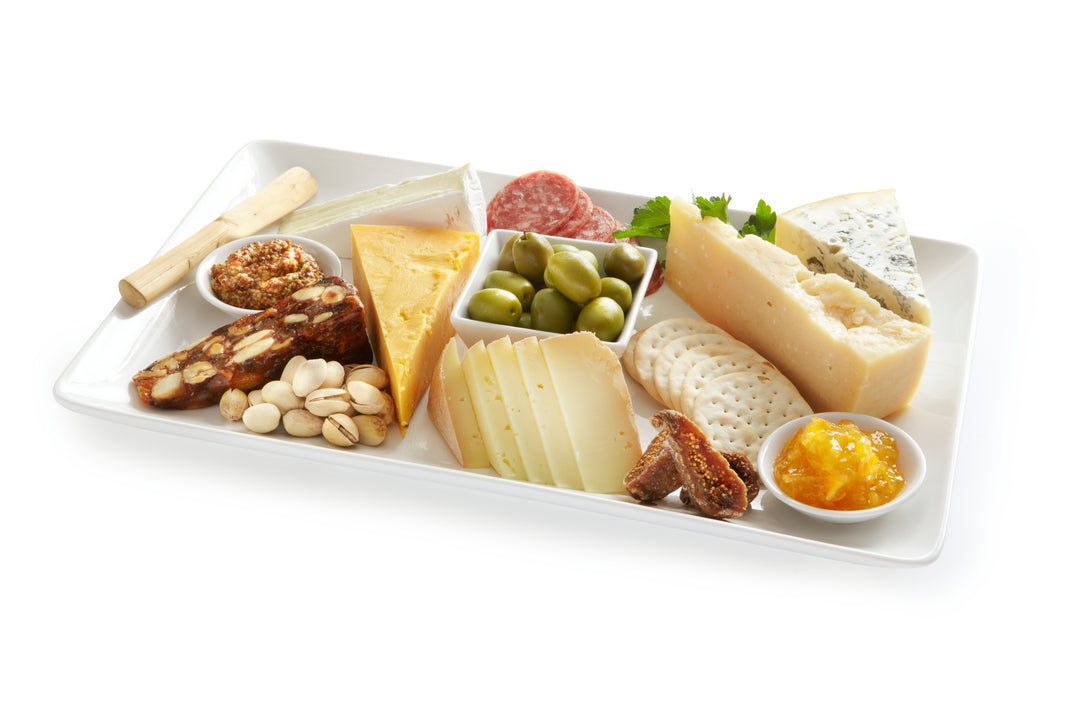
Cheese board with artisan cheeses, bread, fruit, honey, and nuts arranged on a linen-covered table in natural light
Artisan cheese reaches its full potential when it is served thoughtfully and paired with care. While great cheese can certainly be enjoyed on its own, simple accompaniments often help reveal new dimensions of flavor, texture, and aroma.
The goal of pairing is not to compete with the cheese, but to support it.
Begin with temperature. Cheese should almost never be served straight from the refrigerator. Cold suppresses aroma and dulls flavor. Allow most cheeses to rest at room temperature for thirty to sixty minutes before serving. This small step dramatically improves complexity and mouthfeel.
Bread and crackers provide a neutral base. Fresh baguette, sourdough, or lightly toasted country bread work well with most styles. Avoid overly flavored crackers that distract from the cheese itself. The bread’s role is to frame the cheese, not dominate it.
Fruit offers natural contrast. Apples, pears, grapes, figs, and berries bring brightness and gentle sweetness that balance richness. Dried fruits, such as apricots or dates, pair beautifully with aged or blue cheeses, enhancing their depth.
Honey and preserves add another layer. A drizzle of local honey, a spoon of berry jam, or a touch of quince paste can soften sharp edges and highlight hidden notes. These pairings work best when used sparingly, allowing the cheese to remain central.
Nuts contribute texture and warmth. Almonds, walnuts, and hazelnuts echo the nutty flavors found in many aged cheeses. Lightly roasted versions add aroma without overwhelming.
When it comes to beverages, moderation and harmony are key. Wine, cider, beer, tea, and even sparkling water can complement cheese when chosen thoughtfully. Crisp whites often suit fresh cheeses. Light reds pair with softer styles. Dark ales and ciders match well with aged or washed-rind varieties.
Presentation also matters. Arrange cheeses with space between them. Provide separate knives to prevent flavor mixing. Labeling or brief descriptions can invite curiosity and conversation.
Above all, keep things relaxed.
Pairing is not about perfection. It is about exploration. Trying combinations, noticing contrasts, and discovering personal favorites is part of the pleasure.
When cheese is served with intention and simplicity, it becomes more than a snack. It becomes an experience designed to be shared, savored, and remembered.
The Story Behind the Cheese — Why It All Matters

Wheel of artisan cheese on a wooden table with soft golden farm light and pasture in the background
Every wheel of artisan cheese carries a story that extends far beyond its label. It reflects countless decisions, relationships, and commitments made long before it reaches a tasting board or kitchen counter.
Behind each cheese is a network of care.
There are farmers who manage pastures with patience and responsibility. There are animals whose health and comfort directly influence milk quality. There are cheesemakers who rise early, monitor temperatures, adjust techniques, and accept uncertainty as part of the craft. There are affineurs who guide aging with quiet dedication. None of these roles exist in isolation. Each depends on the others.
This interconnectedness is what gives artisan cheese its depth of meaning.
Unlike mass-produced foods designed for efficiency and uniformity, handcrafted cheese embraces variability. It accepts that nature cannot be fully controlled and that beauty often emerges from responsiveness rather than rigidity. A wetter spring, a hotter summer, or a colder winter may subtly reshape a cheese’s profile. These changes are not flaws. They are records of lived conditions.
Supporting artisan cheese also supports landscapes and communities. Small-scale dairies often practice responsible grazing, preserve open land, and contribute to rural economies. When consumers choose these products, they participate in sustaining agricultural traditions that might otherwise disappear.
There is also a cultural dimension. Many cheese styles represent regional identities, inherited techniques, and generational knowledge. When these cheeses are made and appreciated, heritage remains active rather than archived.
For the person enjoying the cheese, knowing this story changes the experience. Flavor becomes contextual. Texture becomes meaningful. Each bite feels connected to something larger than individual pleasure.
It becomes an act of appreciation.
In a world that increasingly favors speed and convenience, artisan cheese invites slowness. It encourages attention. It asks us to notice where food comes from and how it arrives in our lives.
And in doing so, it reminds us that eating can be both nourishing and thoughtful.
That is why the story matters.
It turns consumption into connection.
More Than Food, a Living Craft

Aged artisan cheese wheel on a rustic wooden table in soft natural light with a stone cellar background
From the first blades of grass in a pasture to the quiet stillness of an aging cellar, artisan cheese is shaped by countless forces working together over time. Milk, seasons, microbes, human skill, and environmental conditions all leave their mark, creating foods that are never static and never accidental.
Every wheel represents a collaboration between nature and people.
It reflects the health of the land, the care given to animals, the intuition of the cheesemaker, and the patience required for proper aging. It carries traces of weather patterns, microbial communities, and regional traditions. Nothing about it is isolated. Everything is connected.
This is what makes artisan cheese different from standardized products. It is not designed to erase variation. It is designed to honor it. Each batch offers a slightly different expression of the same idea, shaped by the moment in which it was created.
When you choose handcrafted cheese, you are choosing more than flavor. You are choosing to support craftsmanship, sustainability, and agricultural heritage. You are participating in a cycle that values quality over speed and meaning over convenience.
You are also choosing curiosity.
You are choosing to taste thoughtfully.
To notice texture and aroma.
To ask where something comes from.
To appreciate process as much as outcome.
In this way, artisan cheese becomes more than nourishment. It becomes a living craft — one that continues to evolve through the hands of dedicated makers and the attention of engaged eaters.
Each slice tells a story.
Each bite carries time.
And each experience deepens our understanding of how profoundly food can connect us to land, people, and tradition.
Leave a comment